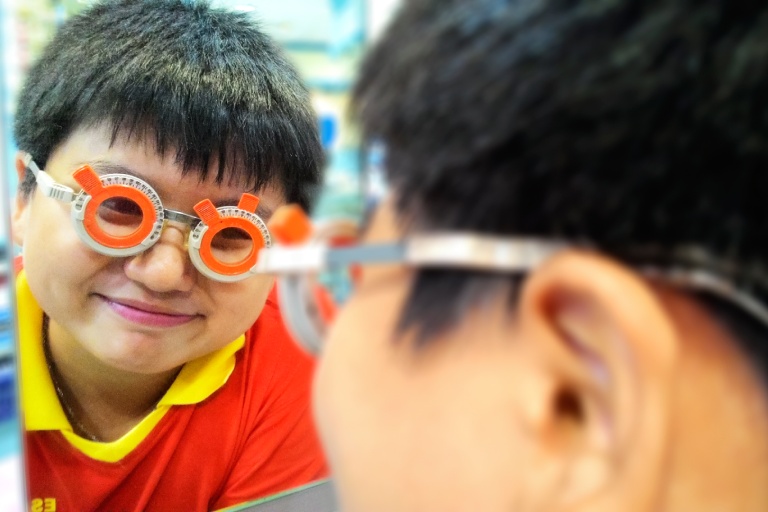
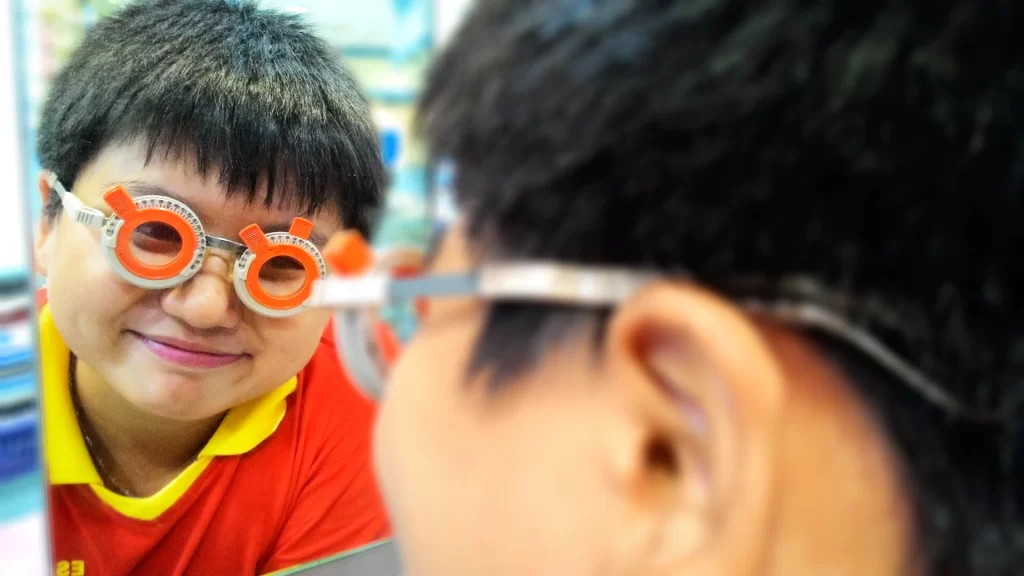
In Singapore, myopia (short-sightedness) is so common – almost like a “growing-up stage” for many school children.
But today, parents in their 30s and 40s have more choices than ever before. It’s no longer just about giving your child “stronger glasses.”
Many parents know their child needs spectacles – but not everyone fully understands the long-term impact of myopia.
There’s actually a big difference between:
- Just helping your child see clearly, and
- Actively slowing down myopia progression to protect their future eye health
Understanding this difference is the first step to making a better decision for your child.
What is Myopia?
Myopia, also known as short-sightedness, is when someone can see things clearly up close, like when reading a book or using a computer, but finds it hard to see things that are far away, such as road signs or bus numbers.
This happens because the eye doesn’t focus light properly onto the retina, which is the part of the eye that helps us see clearly.
Myopia usually starts at a young age, often before 10 years old. It can gradually get worse over time, changing every few months or years, and usually stabilises in the late teens or early twenties.
The “Invisible Symptoms” Checklist: Is Your Child Struggling?
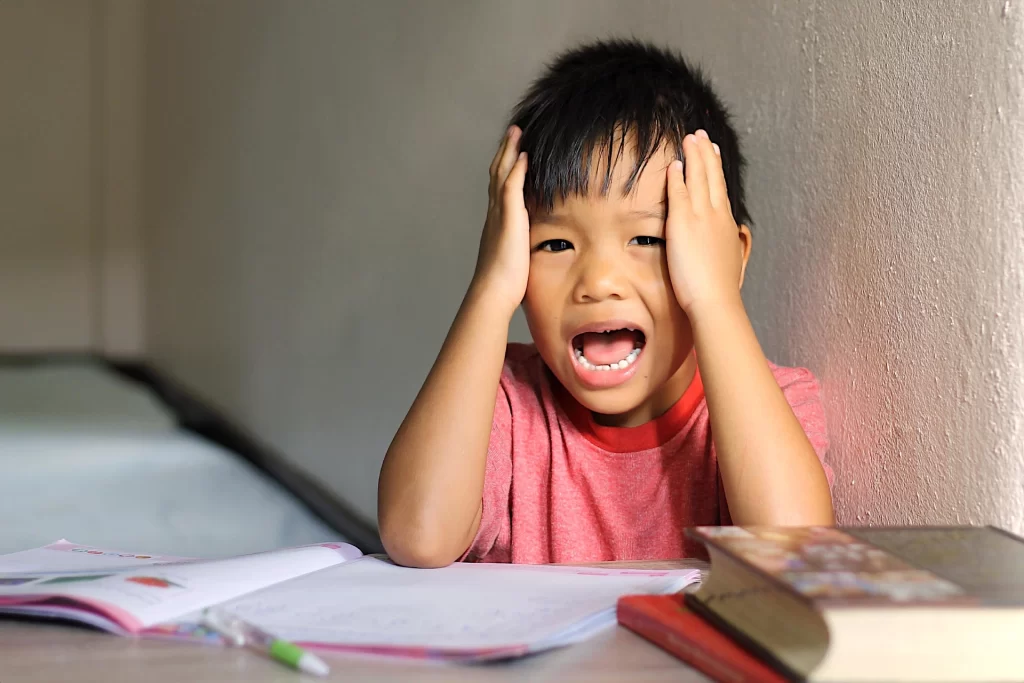
Children rarely complain about blurry vision because they assume everyone sees the world the way they do. As a parent, keep an eye out for these “soft signs”:
- The Squint and Frown: Does your child squint or tilt their head when trying to see the TV? This is a reflex to artificially sharpen a blurry image.
- Physical Fatigue: Frequent headaches or eye rubbing after a school day are often signs of visual over-exertion.
- The Forward Lean: If your child is constantly moving closer to the TV or holding books just inches from their face, their distance vision may be struggling.
- A Shift in Interests: If a child suddenly loses interest in sports like badminton or football, it might be because they can no longer track the ball clearly.
Why High Myopia is “Bad”
Mild myopia is often just an inconvenience, but “High Myopia” (a power of 6.00 or higher) poses real health risks.
Imagine the eye is like a balloon. As myopia increases, the eyeball grows longer, stretching the internal layers and making the retina thinner. This thinning makes the eye vulnerable to serious conditions later in life, including:
- Glaucoma (a “silent” eye disease where pressure or poor blood flow damages the optic nerve, leading to gradual vision loss)
- Cataracts (a clouding of the eye’s lens that makes vision look foggy or dull)
- Retinal tears or detachment (happens when the eye’s light- sensing layer separates, like wallpaper coming off a wall)
- Myopic maculopathy (damage to the central retina caused by high myopia, leading to blurred or distorted vision)
What can we do for myopia?
During eye examinations, we often explain that single-vision glasses only help children see clearly; they do not stop the myopia from getting worse. While traditional bifocals or progressives were used in the past, research shows their effect is quite limited. Among the various methods available today, Essilor’s Stellest and Hoya’s MiYOSMART lenses stand out for their high effectiveness, slowing down myopia progression by an average of 60%.
How Do Stellest & MiYOSMART Work?
Both Stellest and MiYOSMART lenses use a smart dual-zone design to help control myopia.
- Clear Centre Zone
THis is the part your child looks through most of the time.
It provides sharp, clear and comfortable vision for school, reading and daily activities. - Myopia Control Zone (Outer Area)
Around the sides of the lens, there is a special treatment that changes how light enters the eye.
This gently sends a “signal” to the eye to slow down growth, which helps to control myopia progression over time.
What’s the Difference Between Them?
- Stellest uses a smooth ring-based design around the lens
- MiYOSMART uses tiny honeycomb-like focus points
They may look different, but both are clinically proven to be similarly effective in slowing myopia when worn consistently.
Stellest VS MiYOSMART
– Complete Comparison Power guarantee
A reassurance for parents: both Essilor and Hoya provide a 6-month power warranty on their myopia control lenses, reflecting their confidence in how well these lenses help manage myopia in children.
| Criteria | Essilor Stellest | Hoya MiYOSMART |
| Effectiveness | ~60–67% slowing of myopia progression in clinical studies | ~60% slowing of myopia progression with strong clinical evidence |
| Durability | Polycarbonate (lightweight, impact-resistant, safe for kids) | Polycarbonate, highly durable and suitable for active children |
| Coating Options | Crizal coatings (anti-reflection, scratch resistance, optional blue light filter) | Anti-reflective + scratch-resistant, optional BlueControl & photochromic lenses |
| Starting Point of Control | Can start early (even pre-myopia / early stage) | Typically used once myopia is already present |
| Warranty | 6-month power adaptation / effectiveness warranty | 6-month power adaptation / effectiveness warranty |
| Research Strength | Backed by 6-year clinical data, one of the longest studies showing sustained myopia control First FDA market authorized spectacle lens to slow the progression of shortsightedness in children | Supported by 6-year clinical study (longest DIMS lens study) with proven long-term effectiveness and no rebound effect |
| Brand Strength | Essilor – world’s largest ophthalmic lens manufacturer, strong R&D investment and global reputation Known for clarity and precision in vision correction | Hoya – globally recognized optical technology company, strong innovation and partnership with research institutions Widely recognised for durability and long-lasting performance |
Which Lens Is The Right Choice For Your Child?
Choosing between two advanced myopia control technologies like Stellest and MiYOSMART is not about finding a “better” lens.
It’s about finding the one that best suits your child’s eyes, lifestyle, and daily habits.
Every child is different.
That’s why the best approach is to look at multiple factors together – with guidance from an eye care professional.
Instead of asking:
🔎“Which lens is better?”
A better question is:
🔎 “Which lens is more suitable for my child?”
If you’d like to find the most suitable option, feel free to book an appointment with us.
📳 Call: 62412191
💬Whatsapp: +65 96989246
Let us help you manage your child’s myopia with confidence and care.