
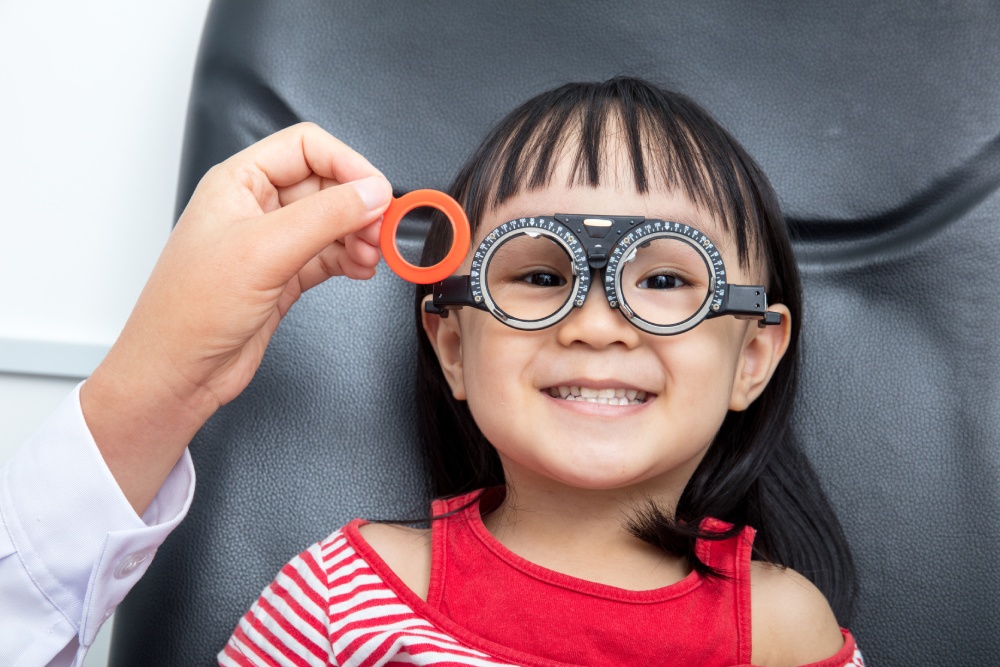
Why does my child need myopia control?
Myopia (short-sightedness) doesn’t just mean your child cannot see far objects clearly – it also can get worse over time, especially during growing up years.
Most children develop myopia between age 6- 12, and it often continues to increase throughout their schooling years. As the degree rises, their dependency on glasses increases, and more importantly, higher myopia can increase the risk of eye health problems later in life.
Many parents think that wearing single-vision glasses will “solve” the problem. But in reality, single-vision glasses only help your child see clearly – they do not offer any control against myopia and are not an effective treatment.
So what is Myopia Control?
Myopia control focuses on slowing down the progression of your child’s degree.
By managing myopia early:
- Your child may end up with lower overall degree when they grow up
- Enjoy more stable vision
- Reduce the risk of serious eye diseases such as macular degeneration and retinal detachment in the future
The younger the child, the faster myopia can progress. Starting early gives us a better chance to control it effectively.
Glasses for myopia control
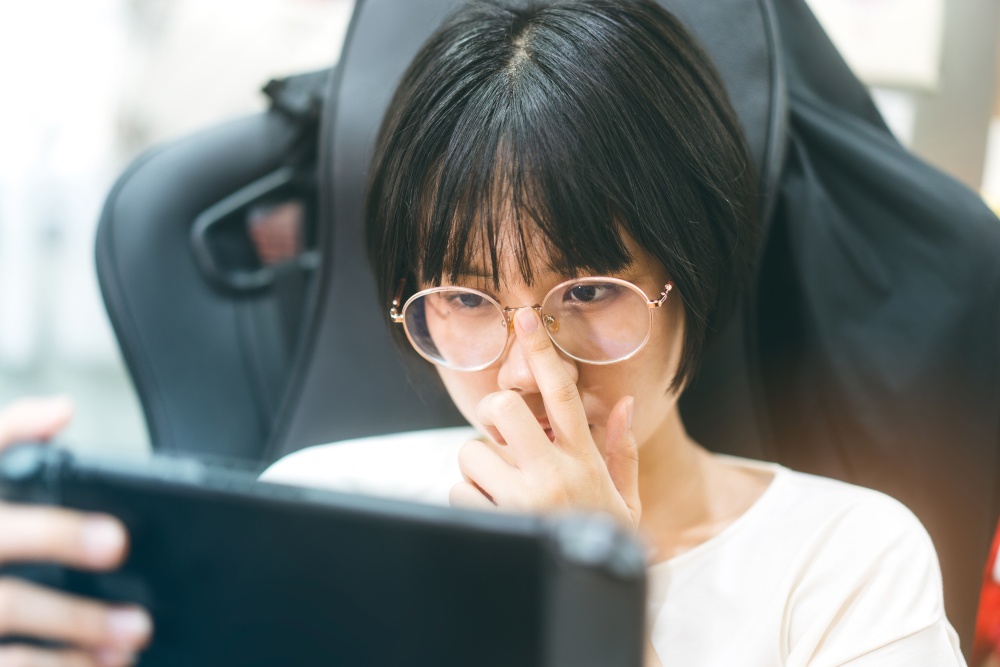
Myopia control glasses are specially designed to do two things at the same times
- Help to see clearly
- Slow down the worsening of myopia
Myopia control glasses use advanced designs that guide how light enters the eye. This sends signals to the eye to help control excessive eyeball elongation – which is the main cause of increasing myopia.
Modern myopia control lenses contain special patterns or zones (often called micro-lens designs) that:
- Adjust how light is focused inside the eye
- Help reduce the signal that causes the eye to grow longer
- Support more normal eye development
Types of Myopia Control Glasses
Some commonly used options include:
- Essilor Stellest
- Hoya MiYOSMART
- Zeiss MyoCare
Essilor Stellest, Hoya MiYOSMART, and Zeiss MyoCare are all clinically researched myopia control lenses developed by established optical companies. Each works slightly differently, but all aim to slow down myopia progression in children while providing clear and comfortable vision for daily wear.
Soft Contact Lenses for Myopia Control
Soft contact lenses for myopia control are designed to do more than just correct vision. They also help to slow down the progression of myopia in children.
Similar to myopia control glasses, myopia control soft contact lenses work by slightly changing how light is focused in the eye. This helps to send signals to the eye to reduce excessive eye growth.
Different designs of the products achieve this in slightly different ways, such as:
- Dual-focus lenses
- Concentric ring designs
- Extended depth-of-focus technology
Some popular myopia control contact lenses include:
- Misight 1 Day (Cooper Vision)
- Acuvue Abiliti 1-Day (Johnson & Johnson)
Who are they suitable for?
Soft contact lenses are a great option for older children and teenagers (8-14years old), because they offer clear vision without the need for glasses, making them convenient for sports and active lifestyles.
They provide clear vision and myopia control at the same time, making them both practical and effective.
Once children are taught how to handle contact lenses, they are safe and easy to use as long as proper hygiene is followed.
Important to know
To achieve good myopia control results:
- Lenses should be worn during waking hours
- Typically at least 10 hours a day
- For at least 6 days a week
Orthokeratology (Ortho-K)
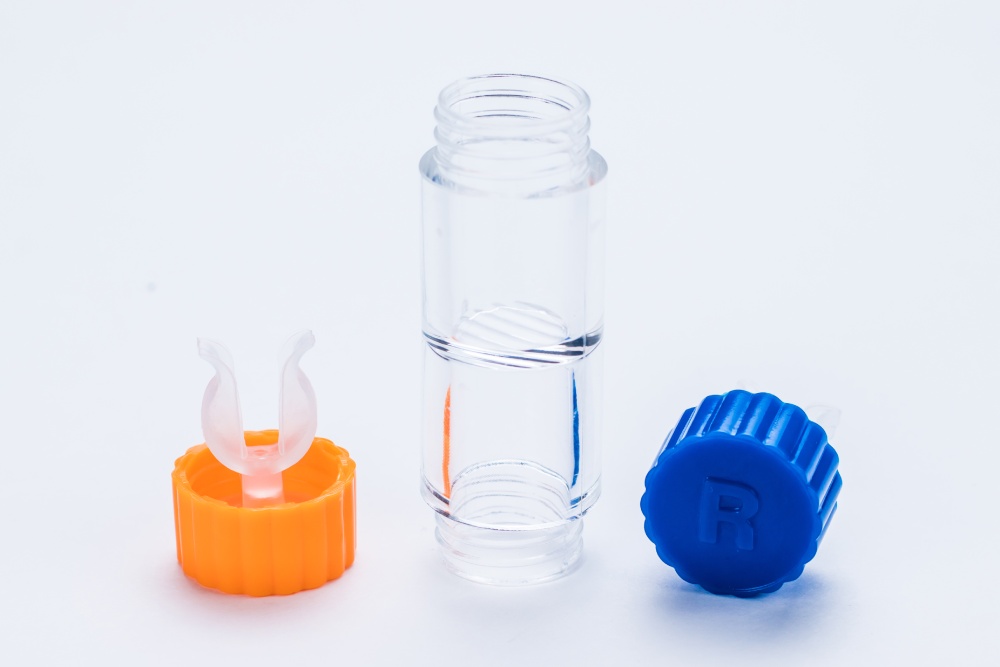
Orthokeratology, or Ortho-K, is a treatment that uses specially designed rigid contact lenses worn during sleep to gently reshape the front surface of the eye (cornea). While you sleep, the lenses temporarily flatten the cornea, so you can see clearly during the day without glasses or contact lenses.
Beyond clear vision, Ortho-K lens also helps to slow down myopia progression by controlling how the eye grows.
Ortho-K is popular for children and teens with active lifestyles, as it provides freedom from glasses during the day – good for sports and outdoor activities
It is a safe and effective myopia control option, supported by years of research. However, regular follow-ups with your optometrist are important to ensure the lenses fit well and your eyes stay healthy.
Atropine Eye Drops
Atropine eye drops are commonly used to help slow down myopia (short-sightedness) in children. They are prescribed in very low doses (0.01% – 0.05%).
Unlike glasses or contact lenses, atropine does not correct vision directly, so children will still need to wear their usual glasses or contact lenses to see clearly
Atropine helps to control eye growth by affecting signals regulating eye growth in the retina (the light- sensitive layer at the back of the eye).
Atropine is helpful for children whose myopia is progressing quickly, or when other methods alone are not enough. It can be combined with treatments like myopia control glasses or Ortho-K to enhance myopia control.
At low doses, atropine is generally safe and well tolerated. Some children may experience:
- slight light sensitivity
- Mild difficulty focusing up close
These effects are usually temporary and can be managed, for example with photochromic lenses if needed.
Treatment should be guided by an ophthalmologist, with careful monitoring with efficacy and side effects.
Lifestyle Change
Myopia control is not just about wearing the right lenses, it’s about building the right habits early.
A balanced lifestyle with:
More Outdoor Time = Better Eye Health
- Natural sunlight helps to regulate eye growth
- Looking at distant objects relaxes our eyes
- Recommended at least 2 hours of outdoor time daily
Manage Screen Time & Near Work
Too much near work, like reading, using tablets, or smartphones, can accelerate myopia progression.
- Keep a distance of 30- 40 cm when reading
- Ensure good lighting
- Follow 20-20-20 rule, every 20mins near work, look at something 20 feet away for 20 seconds
Proper Reading Posture
- Sit upright
- Keep books at eye level
- Avoid lying down while reading
Regular Eye Checks
Children often adapt to blurred vision and may not complain. Regular eye checks help to detect changes early before they worsen.
Whether kids are using myopia control glasses, lenses or Atropine eye drops, regular reviews ensure the treatment is actually working. If progression is still fast, adjustments can be made early.
We recommend children to have their eyes checked every 6 months.
At Trendy Eyes, we don’t just check eyesight- we track your child’s visual development over time and guide you through every stage of myopia control.